WHOOP API / Exports
OAuth · Import
A closer look at exam readiness.
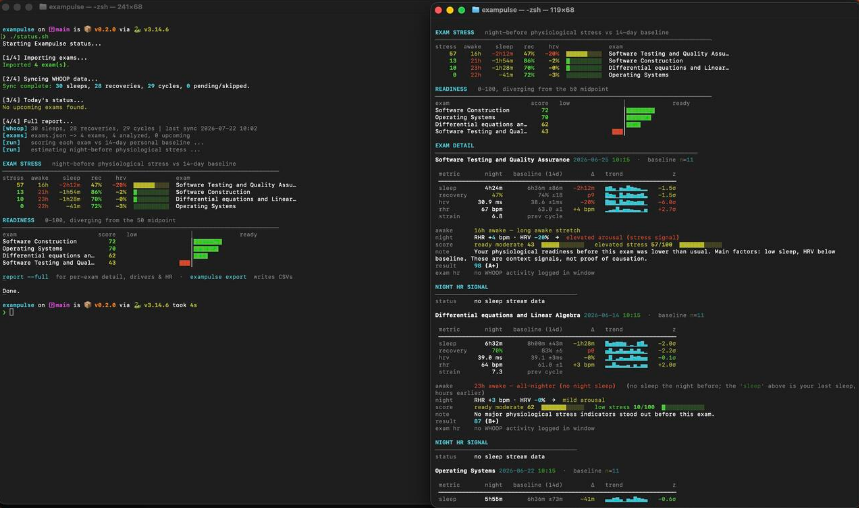 DEMO DATA
A Python command-line tool connecting wearable recovery metrics with exam schedules for personal, time-aware analysis.
Personal software project · Python integration, data modeling, CLI experience, and test-focused analysis.
Working local CLI · No hosted dashboard
Wearable data and exam schedules sit in different places, making it hard to inspect personal recovery and stress patterns around demanding days.
A Python CLI syncs WHOOP data via OAuth/API or imports official exports, stores records locally in SQLite, and generates readiness reports relative to a personal 14-day baseline.
OAuth · Import
Sync · Commands
14-day baseline
Terminal reports
Local storage
Readiness scores are personal exploratory indicators, not a validated medical or academic performance model. Some WHOOP streams may be unavailable; fine-grained heart-rate analysis requires separately supplied data. No public deployment or package-registry release was verified.